
It's completely normal to feel anxious before any surgery, even one described as "minimally invasive." Here are honest, direct answers to the concerns patients raise most often.
"Is It Actually Safer Than Traditional Surgery?"
For the many procedures where it's appropriate, laparoscopic surgery has an excellent safety record — often with fewer wound infections and complications related to the incision itself, since the incisions are much smaller than open surgery. It is not inherently riskier; for most eligible patients, it is the gentler option overall.
"What About the Anesthesia?"
Laparoscopic procedures are performed under general anesthesia, administered and monitored by a qualified anesthesia team throughout. Modern anesthesia is very safe for the vast majority of patients, and your team will review your individual health history beforehand to plan safely around any specific risk factors.
"What If Something Goes Wrong During Surgery?"
Surgeons are trained specifically to recognize when a laparoscopic approach isn't going as planned and to convert to open surgery if that becomes the safer path — this built-in safety net is a standard part of laparoscopic practice, not a sign of failure.
"Will I Be in a Lot of Pain Afterward?"
Most patients experience meaningfully less pain after laparoscopic surgery than they would after an equivalent open procedure, thanks to the smaller incisions. Pain is still managed proactively with appropriate medication in the days following surgery.
"How Long Until I'm Back to Normal?"
This varies by procedure, but one of the biggest advantages of the laparoscopic approach is a faster return to light activity — often within days rather than weeks — with most patients resuming normal routines noticeably sooner than after open surgery.
"What Are the Real Risks I Should Know About?"
As with any surgery, risks exist — including bleeding, infection, or, rarely, injury to nearby structures. Your surgeon will walk through the risks specific to your procedure during consultation, so you can make an informed decision rather than relying on general anxiety alone.
Dr. Asad's Approach
Pre-surgical anxiety is completely normal, and Dr. Asad takes time before every procedure to walk patients through exactly what to expect — what the surgery involves, realistic recovery, and the specific risks and benefits for their situation — so no one goes into the operating room with unanswered questions.
Frequently Asked Questions
Is general anesthesia itself risky?
Modern general anesthesia is very safe for the large majority of patients, with your anesthesia team reviewing your individual health beforehand to plan around any specific risk factors.
How many small incisions does laparoscopic surgery usually need?
It varies by procedure, but most laparoscopic operations use somewhere between three and five small incisions, each generally under 1.5 cm.
Will I have visible scars afterward?
Laparoscopic incisions are small and typically fade significantly over time, resulting in far less visible scarring than an equivalent open surgery.
What should I do with my pre-surgery anxiety?
Talk about it directly with your surgical team — a clear conversation about exactly what to expect is one of the most effective ways to ease pre-surgical nerves.
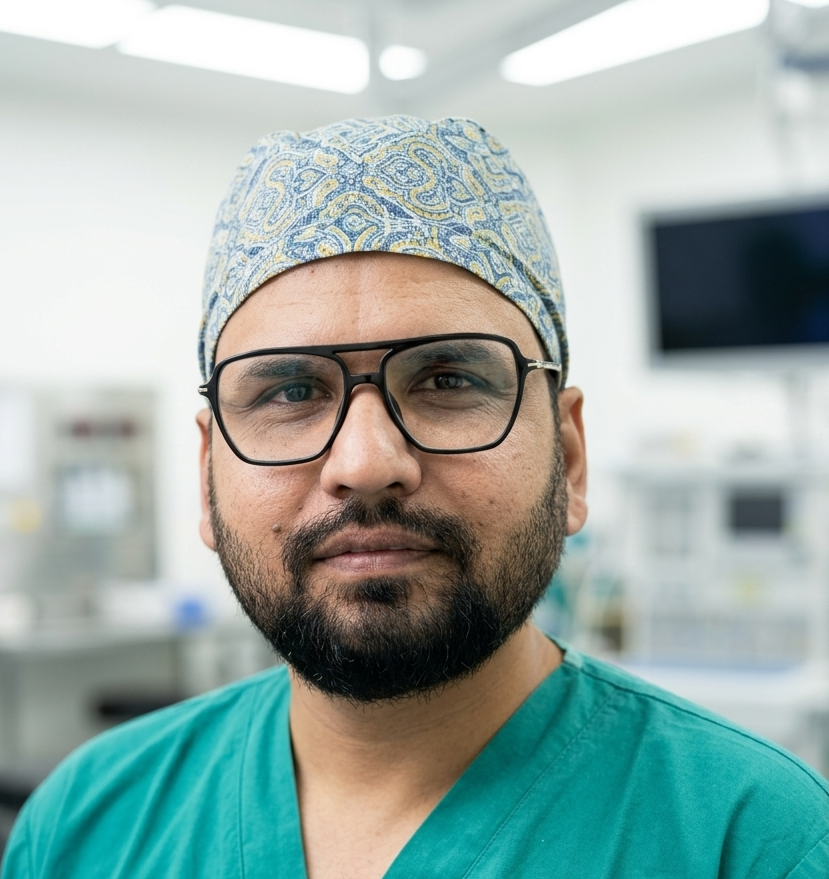
Medically Reviewed by Dr. Muhammad Asad
MBBS · FCPS · CPHQ (USA) · MACHE (USA) — Colorectal & Laparoscopic Surgeon, Associate Professor, 14+ years of surgical experience. About Dr. Asad →
This article is for general patient education and does not replace a professional medical evaluation. If you are experiencing these symptoms, please consult Dr. Asad or another qualified physician for a diagnosis specific to your situation.